When Peace Gets Its Moment
Welcome back to From David’s Desk, a newsletter penned by Carlyle Co-Founder and Co-Chairman David M. Rubenstein. Each edition provides insights on public policy, geopolitics, and other topics in and around Washington, DC. Discover past editions on the series' webpage.
There is a seemingly endless number of awards or prizes given to distinguished individuals and organizations. It has never been clear to me whether those giving the awards and prizes or those receiving them derive more pleasure from the recognition.
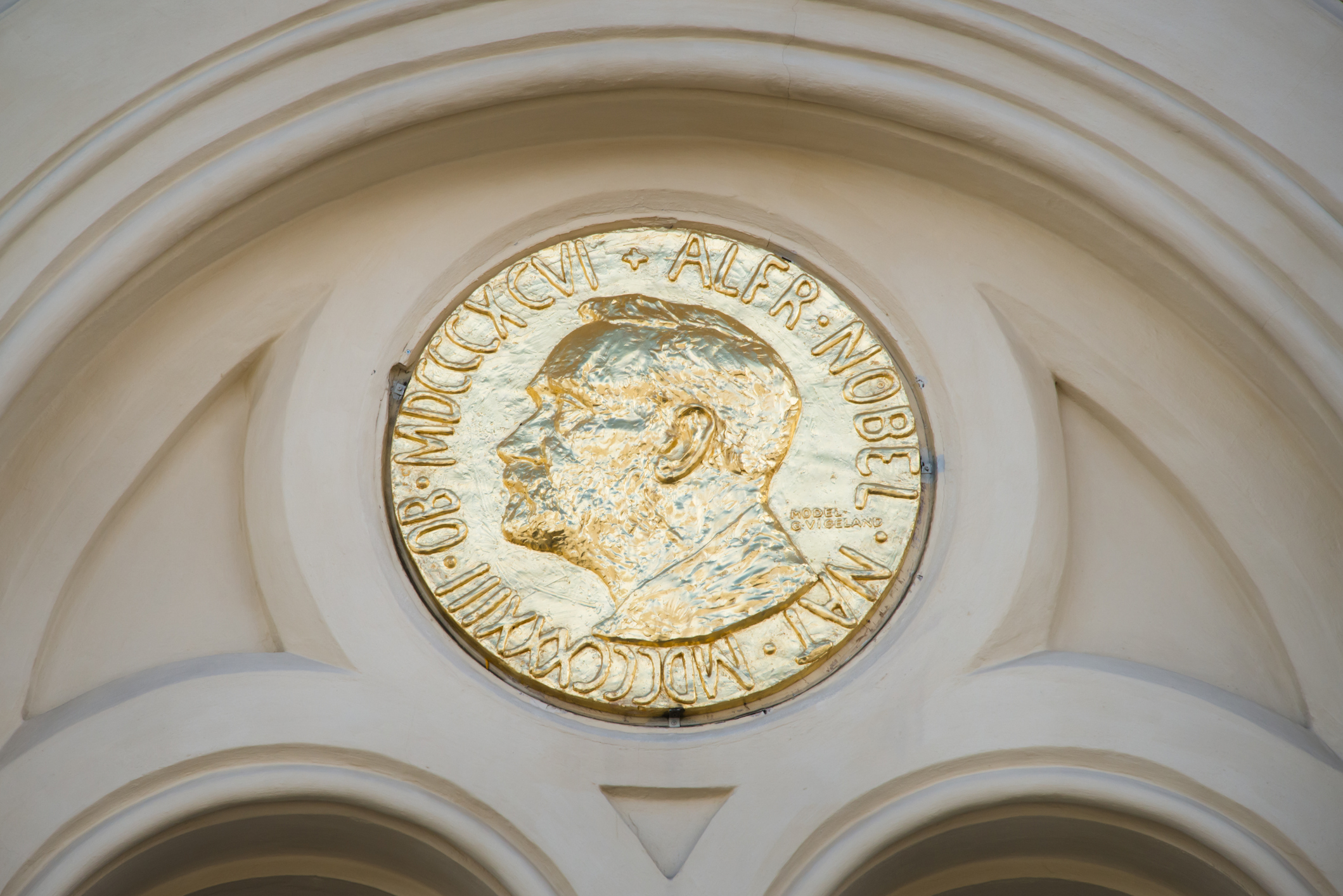
But it is clear that despite efforts to establish new and more lucrative prizes or awards (e.g., the Breakthrough Prizes, which provide recipients with a much higher cash prize than any other prize or award), the gold standard in prizes or awards is still the Nobel Prize, which has been given since 1901, following the bequest in 1895 of Swedish industrialist, inventor, and chemist Alfred Nobel. (Nobel had more than 350 patents at the time of his death.)
And of the Nobel Prizes awarded in the beginning of every October, the one which usually gets the most public attention is the Peace Prize – presumably because peace is a more understandable achievement than a sometimes esoteric, often difficult-to-understand, scientific discovery.
Why is the Nobel Peace Prize something that even a US President might want? After all, Presidents Theodore Roosevelt, Woodrow Wilson, Jimmy Carter, and Barack Obama have each won the Prize.
Obviously, the century-plus awarding of the various Nobel Prizes offers the recipients unrivaled prestige, attention, and satisfaction, not to mention a cash prize. While the monetary award has eroded in relative value over the years, it remains a substantial sum for many recipients, particularly those in academia. Today, each Prize comes with a cash award of about $1.2 million. Yet among the six prizes awarded annually, none carries the same level of international attention, acclaim, or adulation as the Peace Prize.
And that is because peace is a subject that everyone understands, and presumably most people on the face of the earth believe peace is the most desirable of achievements. Who does not want to bring peace into the world?
The other Prizes, with the possible exception of the Literature Prize, which occasionally goes to a well-known author, are typically awarded to scientists or economists whose names and work are not familiar to the general public. Their discoveries are often highly technical and difficult for most people to grasp. There are, of course, notable exceptions: Albert Einstein won the Physics Prize for discovering the law of photoelectric effect while James Watson and Frances Crick won the Chemistry Prize for discovering the structure of DNA.
How did the Prizes come about, who actually makes the selection, and how are the Prizes typically bestowed?
The idea for the Prizes was that of Alfred Nobel, a Swedish-born industrialist and inventor who was best known during his lifetime for inventing dynamite. While dynamite was used to facilitate construction and land excavation, it was also employed in warfare and thus could be quite deadly in its impact. While Nobel had not initially intended dynamite to be used in wars or for killing, companies to which he licensed his invention did sell dynamite to countries that used it for lethal purposes. (Companies that licensed dynamite from Alfred Nobel sold it to opposing nations engaged in warfare, apparently without taking sides.)
Alfred Nobel was mysterious in many ways. He was Swedish by birth, but as an adult hardly ever visited Sweden. Yet he entrusted the Nobel Prizes largely to Swedish academies.
He never married and left no known children. He may have fathered a child with a young woman he knew, who later gave birth to a child. (A military officer was officially listed as the father, but Nobel was believed at the time to be the actual father, and he provided the child with enough money to ensure a comfortable life.) Nobel did have other relationships with women, one of whom was Bertha Kinsky, who was involved in various peace-focused endeavors. Kinsky had worked for Nobel as an assistant before leaving him to marry an Austrian nobleman. Alfred Nobel and Bertha Kinsky apparently stayed in touch, and in her later years she became involved with various peace movements. It is thought by some that she may have influenced Nobel, knowingly or not, in his decision to include a Peace Prize among the awards. (And she was actually awarded a Peace Prize herself in 1905.)
But how did all of the Prizes come about in the first place? There is no definitive answer. There is a wonderful apocryphal story that is honestly too wonderful not to repeat and probably too wonderful to be completely true. As the story is told, Alfred Nobel was reading his morning newspaper in Paris on April 13, 1888 and read that he had died. The newspaper’s obituary referred to him as the “merchant of death” for having invented and sold enormous amounts of dynamite used to kill thousands of people in various wars.
In reality, one of Nobel’s brothers, Ludwig, also an inventor and industrialist, had died, and the newspaper simply wrote about the wrong Nobel.
But Alfred Nobel, while no doubt pleased that he was still alive, was not pleased with how others viewed him. And, as the story goes, he resolved to improve his image – upon his death and in the years to follow.
So, Nobel devised a plan to award Prizes for scientific discoveries, but the plan itself took time to develop. He apparently wrote a Will in 1889, the year after his brother Ludwig’s death, but that version did not survive. Another Will was drafted in 1893, which left parts of the estate for awards recognizing scientific achievements and a Peace Prize. That Will also included provisions for his relatives.
But in 1895, Nobel wrote a final Will by hand and, it seems, without professional or legal advice. In it, he directed that annual Prizes, accompanied by cash awards, be funded by a foundation created from his estate. The Swedish Academy of Sciences would award Prizes in Physics and Chemistry, the Karolinska Medical Institute would oversee the Prize in Physiology or Medicine, and the Swedish Academy in Stockholm would select the recipient of the Literature Prize.
In addition, Nobel wanted a prize to be awarded to the person who had “most or best promoted the Fraternity of Nations and the Abolishment or Diminution of Standing Armies and the Promotion and Increase of Peace Congresses.” This Peace Prize, as it has come to be known, was to be awarded by a committee of five persons to be selected by the Norwegian Parliament.
Why was Norway – a country to which Nobel had no known relationship or attachment – given the Peace Prize responsibility? Nobel left no explanation, but it was widely believed that he viewed Sweden as more war-prone than Norway. (At the time, Norway was essentially controlled by Sweden, though it gained independence in 1905.)
Nobel’s entire estate – roughly $9 million at the time (largely from royalties generated by more than ninety factories that licensed his inventions, most famously dynamite) was left to the newly created Nobel Foundation, which would fund the Prizes.
Nobel's Will created a fair amount of controversy and angst at the time.
Nobel’s relatives were completely left out of his final Will and they were not happy. There were no direct descendants, and no foundation had been established before Nobel's death. Who would control and operate it? How much money was to be allocated for each Prize? The Swedish academies at the time were quite small and rather provincial. Did they have the expertise to make these decisions, and how would their costs be covered? Meanwhile, the Norwegian legislature wasn’t sure how to create a five-person committee, nor was it clear what exactly the Peace Prize was meant to recognize.
And why Sweden and Norway? Nobel had barely lived in Sweden after the age of nine. He had lived the last 30 years of his life in France (though he was not a French citizen).
While all of these questions were being raised and debated, little progress was made in actually awarding the Prizes. In time, the Swedish government – no doubt recognizing the prestige that would occur to the small country (only 5 million citizens at the time) – took control of the situation, resolved the legal and family disputes (the family received nothing), and enabled the Foundation to be created.
And by 1900, everything was in place to provide the first Prizes by 1901. Each prize was to carry a cash award of $54,000 – an enormous sum at the time, said to be 33 times the annual salary of an average Swedish university professor.
Now, 125 years later, the Nobels have become the ultimate global recognition – not the one with the biggest cash prize, nor necessarily the hardest to win (the Field Medal in mathematics, an area that Nobel did not include, is awarded just once every four years), but the most prestigious. Over the decades, the Nobels have honored the world’s most accomplished scientists – Curie, Marconi, Einstein, Fermi, Born, Feynman, Watson, Crick, Pauling, among many others – and writers such as Kipling, O'Neill, Faulkner, Hemingway, Camus, Beckett, Bellow, Morrison, and Dylan. Of course, the selection committees are not perfect. In both the sciences and literature, notable figures such as Jonas Salk, Albert Sabin, Stephen Hawking, Leo Tolstoy, James Joyce, Robert Frost, George Orwell, Vladimir Nabokov, and Virginia Woolf were never awarded a Nobel Prize.
In 1968, a new prize, never mentioned in Nobel's Will, was added – economics. The Central Bank of Sweden agreed to provide funding and the Swedish Academy of Sciences took on the responsibility of selecting prize winners for an economics award established in Nobel's memory. (This prize is now regarded as the equivalent in prestige and acclaim to the original Nobel Prizes – no doubt due in part to its distinguished recipients, including Samuelson, Friedman, Myrdal, Tobin, Nash, Markowitz, Becker, Sharpe, Lucas, Sen, Bernanke, Farma and Shiller, among many others.)
Part of the charm surrounding the Nobel Prize stems – at least in part – from the quirky way winners are notified: early morning wake-up calls from the awarding academies, especially for recipients in the United States. Some have hung up, thinking the call was a prank, while others couldn’t be reached before the announcement was made public. (One Nobel winner, Ralph Steinman, had just passed away and the Nobel Committee was unaware of this before the selection. He was still given the Prize.)
Another part of the allure is the ceremony on December 10 (the date of Nobel's death), following the October announcement of Prizes. The ceremony is held in Stockholm for the non-Peace Prizes; the Peace Prize ceremony is held in Oslo.
In Stockholm, the Nobel Prize is given by the King of Sweden, following an evening dinner known as the Nobel Banquet. In Oslo, at the Grand Hotel, the Chairman of the Norwegian Nobel Committee, the Prime Minister and the King and Queen of Norway attend the Novel Peace Prize dinner.
Prior to these elaborate ceremonies, the Prize winners give a lecture about their work. (Some Prize recipients do not attend the ceremony, if they are imprisoned or otherwise not allowed by their government to attend, e.g., Liu Xiaobo, Nanges Mohammadi, Ales Bialiatski, and Aung San Suu Kyl.) Bob Dylan did not attend his Literature Prize ceremony and thus made no speech, but he did send a speech which was read on his behalf, and he ultimately did meet with the Swedish Academy to accept the Prize (and collect the cash award).
The Peace Prize
Why is the Peace Prize so well-known and so desirable to receive? And why do so many overtly or quietly campaign for it? There are several reasons:
First, the other Nobel Prizes are awarded in fields where many other honors already exist – though typically with slightly less prestige or historical weight. In contrast, while there are other awards for humanitarian or peace-related efforts, they tend to be newer and rarely attract the same level of global attention when announced.
Second, what is more important than bringing about peace? Scientific and literary achievements are undoubtedly valuable, but they are not always seen as having the same immediate impact on saving or improving lives.
Third, the Peace Prize has been awarded to some of the world’s most iconic and influential figures. Among them: Theodore Roosevelt, Jane Addams, Woodrow Wilson, Ralph Bunche, Albert Schweitzer, George Marshall, Martin Luther King Jr., Willy Brandt, Henry Kissinger, Anwar al-Sadat, Menachem Begin, Mother Teresa, Lech Wałęsa, Jimmy Carter, Shimon Peres, Yitzhak Rabin, Desmond Tutu, Elie Wiesel, the Dalai Lama, Mikhail Gorbachev, Barack Obama, Al Gore, Muhammad Yunus, Kofi Annan, and Nelson Mandela. (Interestingly, one of history’s greatest apostles of peace – Mohandas Gandhi – never received the Nobel Peace Prize.) Who would not want to be in that group?
But how does one actually get selected?
Nobel Peace Prize Selection
For most of the other Nobel Prizes, the candidates are fairly obvious to those making the selections. In the sciences and economics, experts at the Swedish academies, and those who they typically consult, generally know who the leading figures are in the fields they wish to honor. For many recipients, the question is when, not if, they will receive a Prize. The bigger debate is often how many individuals will share the award, which can be shared by as many as three people (all of whom have to be alive at the time the Prize is awarded).
The Literature Prize is far less predictable, and the recipients are often just as surprised as the public. (Bob Dylan is a classic example of a completely unexpected choice).
Alfred Nobel’s Will stated that the Peace Prize is to be awarded, essentially, to those who reduced (or eliminated) the standing armies or increased peace congresses. In the early years of the Prize, it was indeed given to individuals who helped end wars between nations. Over time, however, the selection committee broadened its interpretation to include those who reduced violence or killings within their own countries. For instance, in 2016 Juan Manuel Santos received the Prize for his efforts to end the civil war in Colombia, and in 2010, Liu Xiaobo was given the Prize for his work advocating for human rights in China.
Eventually, the Committee also began awarding the Prize to individuals and organizations promoting broader social causes. These include the International Red Cross, the UN High Commissioner for Refugees, the World Food Programme, Muhammad Yunus and the Grameen Bank for microfinance, the European Union, Doctors Without Borders, the UN Intergovernmental Panel on Climate Change, and the International Campaign to Ban Landmines.
So, in light of all of the foregoing, how does one win the Nobel Peace Prize?
To start, a nomination must be submitted by February 1 of the year in which the Prize is to be awarded. The nominee’s values and accomplishments typically need to align with those of the Committee members, who are generally seen as reflecting Norwegian values – often described as slightly left of center, though that’s a generalization and not always the case.
In short, the Nobel Peace Prize Committee has expanded the original criteria. Recipients no longer need to have ended wars between nations (as President Theodore Roosevelt did in the Russia-Japanese War). The Committee has even awarded the Prize in anticipation of future success in peace efforts – such as in 1973, when Henry Kissinger and Le Duc Tho were honored for their roles in the Vietnam peace process. (Le Duc Tho declined the Prize, one of the few to do so.) In 2009, Barack Obama received the Prize in hopes that his leadership would help prevent or shorten future conflicts, even though no concrete steps had yet been taken.
To date, 111 individuals and 28 organizations have received the Nobel Peace Prize. Over more than a century, the Prize’s legacy - its recipients, its symbolism, and its focus on peace - has made it arguably the most prestigious and sought - after award in the world.
Alfred Nobel never explained why the Peace Prize was to be awarded by a five-member committee appointed by the Norwegian Parliament. As noted earlier, it was assumed that he felt Sweden was too militaristic and might not have had the right temperament to select Peace Prize recipients.
Whatever the reasoning, the Norwegian Parliament agreed to take on the responsibility and created the five-person committee, with members serving five-year terms. That committee is now known as the Norwegian Nobel Committee (formerly the Nobel Committee of the Norwegian Parliament).
In the early years, the Parliament appointed current members of government to the Committee. However, since 2017, that practice has been prohibited. Only former members of Parliament or government may now serve.
Currently, the Chair of the Committee is Jørgen Watne Frydnes, appointed in 2024 to serve through 2029. He previously served as a member from 2021 to 2026 and, at age 40, is the youngest person ever to hold the position.
Frydnes has served as General Secretary of PEN Norway and was CEO of Utøya AS from 2011 to 2023 – an organization dedicated to honoring the 69 young people killed in the 2011 mass shooting on Utøya Island. The attack was carried out by Anders Breivik, a Norwegian neo-Nazi terrorist, targeting participants in a Workers’ Youth League retreat. (Frydnes himself was one of the students present at the time.)
The other members of the Committee are:
Asley Toje (b. 1975)
- Vice Chair
- Committee Member since 2018
- Former Research Director of Norwegian Nobel Institute (2012-18)
Anne Enger (b. 1949)
- Committee Member since 2018
- Former Acting Prime Minister of Norway (1998)
- Former Deputy to Prime Minister of Norway (1997)
Kristin Clemet (b. 1957)
- Committee Member since 2021
- Former Minister of Education and Research (2001-2005)
- Former Minister of Labor and Government Administration (1989-1996)
Gry Larsen (b. 1975)
- Committee Member since 2024
- Former National Director of CARE Norway
- Former State Secretary to Foreign Ministry (2009-2013)
For those interested in receiving a Nobel Peace Prize, it should be remembered that a great many of the recipients did not receive the Prize in the first year in which they were nominated.
For instance, the Nobel Peace Prize for 1978 was given to Anwer Sadat and Menachem Begin – but not to Jimmy Carter, who had single-handily forged the Camp David peace agreement between Israel and Egypt. Why was Carter not included?
There may have been a few explanations, but the principal reason was the nomination deadline. The Camp David agreement occurred September of 1978, while nominations were due by February 1 of that year, and as of that date, Carter had not yet played the essential role he would later assume in the Middle East peace process. Prior to February 1 of 1978, Sadat had visited Israel (in November of 1977), spoken to the Knesset, and began the process which Carter would later help to complete.
For their own efforts to bring peace to Egypt and Israel, Begin and Sadat were presumably nominated for the Peace Prize by the February 1 deadline of that year. Their meeting in Israel had taken place in 1977, making their nominations by early 1978 unsurprising. Carter’s pivotal role at Camp David in September 1978 was clearly essential to the final agreement, but it could not have been anticipated by the nomination deadline. The Nobel Peace Committee made this clear at the time. Of course, for his later contributions, President Carter was awarded the Peace Prize in 2002.
The lesson from that situation seems to be that the Nobel Peace Committee adheres to its rules, but can, over time, correct technical omissions by recognizing deserving individuals later. Thus, a Peace Prize can be awarded years after the events that originally merited recognition.
So how does any person or group convince the Committee to award them the Nobel Peace Prize?
The decision process is opaque, likely by design. The five members of the Nobel Peace Prize Committee are presumably influenced by public sentiment and lobbying efforts - they are human, after all. But overt lobbying can backfire, as it has in several visible cases.
No doubt, the members of the Committee do not want to appear as if they acquiesced to a lobbying campaign. If overt lobbying were effective, every hopeful candidate or group might feel compelled to pursue it.
In any event, as noted, nominations must be submitted by February 1 of the year in which the Prize is awarded. Recommendations made after that date are, if the rules are followed, not eligible for consideration.
The Peace Prize will be announced on October 10, 2025, with the ceremony in Oslo on December 10, 2025.
The Norwegian Nobel Committee announced in March that 338 candidates have been nominated for this year’s Peace Prize - 244 individuals and 94 organizations. These nominees were presumably submitted in accordance with the Committee’s rules, with nominations received by February 1, 2025.
Who can make these nominations? Those eligible to make nominations are these individuals:
- Members of national assemblies and national governments
- Current heads of state
- Members of the International Court of Justice
- Members of the International Board of the Women’s International League for Peace and Freedom
- University professors or associate professors of history, social sciences, law, philosophy, theology and religion; university presidents or equivalent
- Directors of peace research institutes and foreign policy institutes
- Previous Nobel Peace Prize recipients (including board members of organizations who have been awarded the Prize)
- Members of the Norwegian Nobel Committee and former advisors to the Committee
So, to all potential Peace Prize recipients, do not give up on receiving the Prize at some point. Keep working for peace – and, as John Lennon would say, continue “to give peace a chance.”